
Selecting an SMC mould manufacturer in China involves more than comparing quotations, machining equipment or delivery dates. For manufacturers producing automotive panels, electrical enclosures, industrial housings and other composite components, the mould must work as part of a complete compression molding process.
The supplier's engineering decisions can influence material filling, curing consistency, flash, surface appearance, dimensional accuracy, demolding and long-term production stability. A mould that meets drawing requirements but performs inconsistently during production may create additional costs through rework, tooling modifications and downtime.
This guide explains how purchasing teams and manufacturing engineers can evaluate an SMC mould manufacturer through practical evidence of design capability, manufacturing control, trial validation and project readiness.
1. What Should an SMC Mould Manufacturer in China Be Able to Deliver?
SMC, or Sheet Molding Compound, is a fiber-reinforced thermoset material commonly processed by compression molding. The mould must support the material's flow before curing, maintain the required processing temperature, allow air and gases to escape, and release the finished component without unacceptable damage.
For this reason, a capable SMC mould manufacturer should be able to coordinate several connected activities rather than treating tooling as an isolated machining job.
- Product feasibility review: Identify potential molding, dimensional, appearance and demolding risks.
- SMC mould design: Develop the cavity, core, parting line, venting, heating and ejection arrangements.
- Manufacturing engineering: Plan machining, fitting, surface finishing and inspection.
- Assembly and fitting: Verify mold closure, alignment, moving components and critical interfaces.
- Trial molding: Evaluate the actual molded part under agreed process conditions.
- Production preparation: Resolve identified issues and establish acceptance criteria before release.
These capabilities should be evaluated together. Strong CNC machining alone cannot compensate for unsuitable venting, poor thermal balance or an ineffective parting-line design.
Learn more about SUASE's SMC mould solutions and the engineering considerations involved in custom compression tooling.
2. Match the Manufacturer's Experience to Your SMC Component
Not every SMC component presents the same tooling challenges. A relatively simple electrical enclosure, a large automotive exterior panel and a deep structural housing can require different approaches to material flow, surface quality, mold construction and demolding.
| Component Type | Important Tooling Considerations | Evidence to Request |
|---|---|---|
| Automotive exterior panels | Surface appearance, dimensional stability, parting-line quality and large-area temperature distribution | Comparable tooling projects, trial-part inspection and surface-quality criteria |
| Electrical enclosures | Ribs, bosses, mounting features, insert locations and reliable filling | Feature inspection, insert positioning checks and functional trial results |
| Large industrial components | Mold rigidity, lifting and handling, press compatibility, thermal management and maintenance access | Mold dimensions, weight, machining capacity and trial equipment specifications |
| Complex composite housings | Deep features, local thickness changes, venting, ejection and dimensional control | DFM findings, design review records and representative trial results |
Ask a prospective supplier to explain the engineering problems encountered in comparable projects and how those problems were addressed. A relevant case study is more useful than a general statement that the factory manufactures all types of SMC moulds.
3. Evaluate DFM Before the Mould Design Is Finalized
Design for Manufacturability (DFM) is one of the first areas to examine when assessing an SMC mould manufacturer in China. The purpose is to identify potential production problems before they become expensive tooling modifications.
An effective DFM review should consider the relationship between the finished part, the selected SMC material, the available press and the expected production conditions.
What should an SMC mould DFM review cover?
- Wall thickness changes, ribs, bosses and deep-draw features.
- Draft angles and the feasibility of releasing the molded component.
- Parting-line location and the treatment of critical edges.
- Material charge placement and the expected flow path.
- Potential air entrapment and venting locations.
- Heating layout and temperature-sensitive regions.
- Insert installation, access and retention requirements.
- Dimensional tolerances and functional assembly interfaces.
- Trimming requirements and accessibility for maintenance.
The supplier should identify design assumptions and unresolved risks rather than simply confirm that a supplied 3D model can be machined. Where necessary, proposed changes should be reviewed and approved by the customer's engineering team before tooling manufacture begins.
For more information about the tooling development workflow, see SUASE's guide to compression mold manufacturing.
4. Check Mold Design for Material Flow, Flash and Demolding
SMC mould design must account for the behavior of the compound during compression. Before curing, the material flows under the combined influence of charge placement, temperature, pressure, geometry and material characteristics. The mould should be designed around this process rather than treated as a simple negative replica of the finished part.
Material flow and cavity filling
Poorly planned charge placement or an unsuitable flow path can contribute to incomplete filling, weld lines, trapped air or inconsistent fiber distribution. The appropriate solution depends on the actual part geometry and SMC formulation. The manufacturer should explain how the cavity and charge strategy will be reviewed and validated.
Parting line and flash control
Flash can result from several interacting factors, including parting-line geometry, shear-edge condition, material charge, mold closure, press alignment and process settings. A reliable manufacturer should be able to distinguish tooling-related issues from process-related causes during troubleshooting.
Venting and gas release
Venting needs to be considered alongside the expected material flow. Inadequate gas escape can contribute to surface defects, voids or incomplete filling. Vent locations and dimensions should be developed for the specific component and reviewed during trials.
Demolding and part protection
Draft, ejector arrangement, surface finish and the geometry of ribs or undercuts can all affect release. For large or appearance-critical components, the demolding strategy should also consider how the part is supported and handled after separation from the mould.
These details help determine whether a mould can produce acceptable components repeatedly, rather than only generate an initial sample.
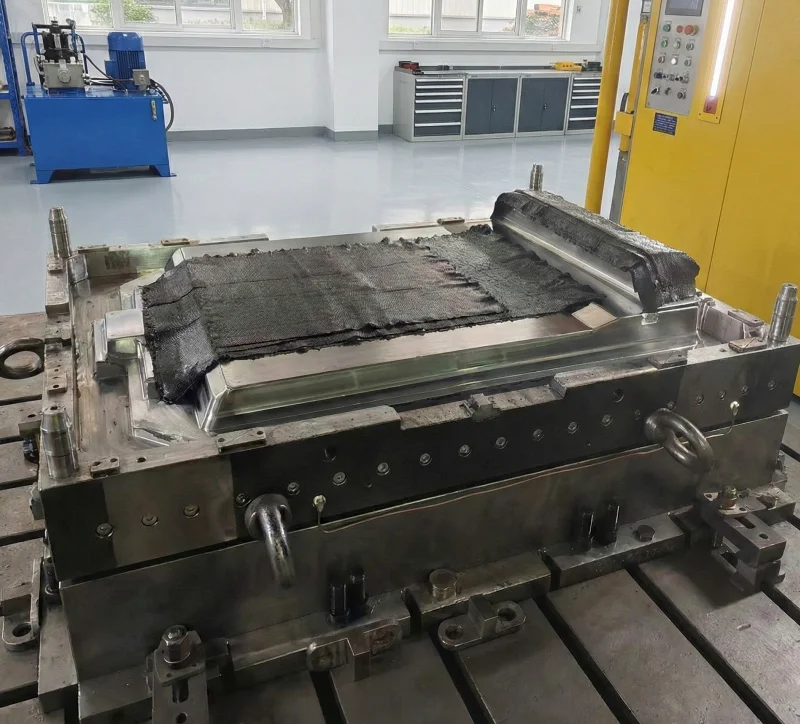
5. Verify Heating System Design and Temperature Control
Temperature management is a critical part of thermoset SMC compression molding. The mould must transfer heat to the compound in a manner appropriate for the material's curing characteristics and the required production cycle.
Uneven temperature distribution can contribute to differences in curing behavior, shrinkage, surface appearance and dimensional consistency. Increasing the temperature setting alone is not necessarily an effective solution when the underlying issue is an uneven heating layout or inadequate heat transfer.
Questions to ask the mould manufacturer
- What heating method is proposed for the specific tool?
- How are heating channels, circuits or cartridge locations arranged?
- How will temperature distribution be evaluated across the mould?
- Are representative measurement locations defined for trial validation?
- Can the heating system be accessed for inspection and maintenance?
- What temperature tolerance and measurement method will be agreed for acceptance?
Depending on the project, the heating method may involve thermal oil, steam or electric heating elements. The suitable option depends on the mould structure, available utilities, process requirements and the customer's production equipment.
Rather than accepting an unsupported claim of temperature uniformity, buyers should request the proposed measurement method, relevant trial records and agreed acceptance criteria.
6. Confirm Manufacturing Capacity, Not Just the Equipment List
A supplier's machinery list is useful, but it does not by itself demonstrate that the supplier can manufacture a particular SMC mould accurately and on schedule. Buyers should examine the relationship between the tool's dimensions, machining requirements, material handling, inspection plan and available production resources.
Precision machining
CNC machining establishes the geometry of the cavity, core and other tooling components. For large or complex moulds, the manufacturing plan should also address setup stability, datum management, machining sequence and inspection of critical surfaces.
Assembly and fitting
Individual components can meet their dimensional drawings while the assembled mould still has alignment or closure problems. Assembly and fitting therefore need their own inspection and verification steps, particularly around parting lines, inserts, guide systems and moving mechanisms.
Inspection capability
Ask how critical dimensions are measured and how inspection results are documented. Depending on the part and project, the inspection plan may include dimensional measurement, profile verification, surface checks and comparison of molded parts against approved CAD data.
Review SUASE's mould design capability, precision machining and mould assembly and fitting to understand how these stages contribute to tooling development.
7. Check Whether the Manufacturer Can Support a Real Mold Trial
A mould should not be considered production-ready simply because machining and assembly are complete. Trial molding provides evidence of how the tooling performs with the selected material and actual processing conditions.
Before ordering, confirm where the trial will take place, whether the available press is compatible with the mould, who supplies the trial material, and which party is responsible for measuring and approving the molded parts.
What should be checked during an SMC mould trial?
- Material filling and visible flow-related defects.
- Flash condition and parting-line performance.
- Surface appearance and any agreed cosmetic criteria.
- Critical dimensions, flatness and assembly interfaces.
- Demolding behavior and possible part damage.
- Temperature behavior at representative locations.
- Cycle time under the agreed trial conditions.
- Repeatability across a suitable series of trial parts.
Trial acceptance and final production acceptance should be clearly distinguished. A first trial may identify necessary corrections, while final acceptance should confirm that the agreed requirements have been achieved.
Buyers can use the related compression mold acceptance and FAT guide to prepare an inspection and documentation plan.
8. Review the Project Workflow and Delivery Risks Before Ordering
A realistic delivery schedule depends on more than the machining time. Product review, design approval, steel preparation, manufacturing, assembly, trial molding, corrective work and final inspection all contribute to the total lead time.
An experienced SMC mould manufacturer should explain the major project milestones and identify which customer approvals or technical inputs are needed at each stage.
| Project Stage | Key Deliverable | Potential Delay to Control |
|---|---|---|
| Technical review | Confirmed scope, requirements and open issues | Missing drawings, material details or press specifications |
| DFM and design | Reviewed mould design and approved changes | Late product changes or unresolved engineering decisions |
| Tooling manufacture | Machined mould components | Material availability, machining rework or capacity conflicts |
| Assembly and inspection | Assembled tooling with inspection records | Fitting problems or dimensional nonconformities |
| Trial molding | Trial parts and documented findings | Press incompatibility, material availability or process issues |
| Correction and acceptance | Resolved issues and agreed acceptance evidence | Unclear acceptance criteria or delayed customer feedback |
A milestone-based plan makes it easier to identify schedule risks early and distinguish supplier-controlled activities from decisions that require customer approval.
9. Compare SMC Mould Quotations on a Like-for-Like Basis
Two quotations may appear similar while covering different engineering scopes. One supplier may include DFM, trial molding, dimensional inspection and corrective work, while another may quote mainly for tooling manufacture.
To compare offers fairly, request a written scope of supply and clarify the following items before placing an order.
- Mould design and engineering review scope.
- Mould steel grade and applicable material documentation.
- Heating system, venting and ejection configuration.
- Surface finish and any specified treatment.
- Included machining, fitting and inspection activities.
- Trial molding location, number of planned trials and material responsibility.
- Dimensional and functional acceptance criteria.
- Documentation, spare parts and maintenance instructions.
- Quotation validity, payment milestones and delivery assumptions.
- Procedures for design changes, trial corrections and warranty claims.
The lowest initial price is not automatically the lowest-cost solution. However, a higher quotation should also be supported by a clear explanation of its additional engineering scope, quality controls or service commitments.
10. What Information Should You Send for an SMC Mould Quotation?
Complete technical information helps the manufacturer assess feasibility, select a suitable tooling approach and prepare a more realistic quotation and delivery plan.
Recommended RFQ checklist
- Product data: 3D CAD model and the latest 2D engineering drawing.
- Material specification: SMC grade, supplier, color, surface requirements and relevant processing information.
- Production target: Annual volume, expected cycle time and planned production shifts if known.
- Press information: Available press tonnage, platen dimensions, opening stroke and relevant machine interfaces.
- Quality requirements: Critical dimensions, tolerances, appearance criteria and functional interfaces.
- Tooling requirements: Cavity quantity, inserts, heating method, ejection needs and expected mould life.
- Trial and acceptance: Trial location, sample quantity, inspection requirements and approval process.
- Project timing: Required delivery date, design approval milestones and production launch target.
If some details are not yet available, identify them as open items rather than allowing different suppliers to make inconsistent assumptions. This makes quotation comparisons more meaningful and reduces the risk of scope disputes later.
For project-specific enquiries, contact SUASE at info@suase.net.
11. Why Consider SUASE for Custom SMC Mould Manufacturing?
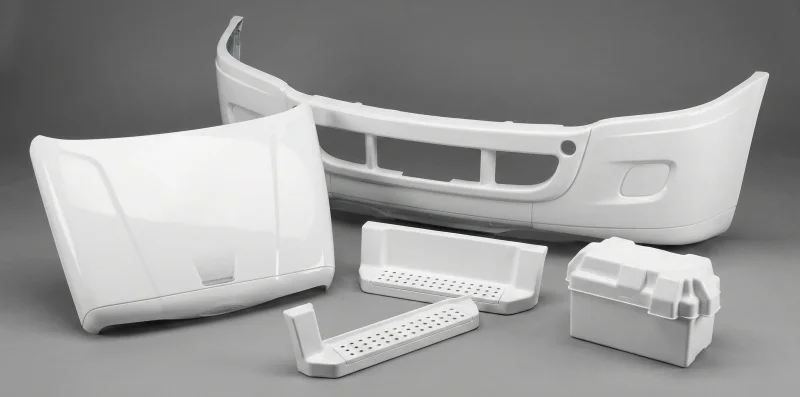
SUASE develops compression tooling for composite manufacturing applications, including SMC, BMC and other reinforced polymer systems. For custom SMC projects, the objective is to connect product requirements with mould design, manufacturing, assembly and trial validation.
When assessing SUASE for a project, buyers should align the required component size, press conditions, material, appearance criteria, production volume and acceptance requirements with the proposed engineering and manufacturing scope.
Relevant capabilities can be reviewed through the company's SMC mould page, design services, machining capability and assembly and fitting process.
The most appropriate tooling solution should be based on the actual project specification rather than a generic promise of universal compatibility or a fixed mould life.
Frequently Asked Questions About SMC Mould Manufacturers in China
What does an SMC mould manufacturer do?
An SMC mould manufacturer designs and produces compression tooling used to form Sheet Molding Compound into finished composite parts. Depending on the project scope, services may include DFM, mould design, machining, assembly, trial molding, inspection and production support.
How do I choose an SMC mould manufacturer in China?
Evaluate relevant project experience, DFM capability, mould design, machining and assembly controls, trial molding resources, inspection methods, project communication and post-delivery support. Ask for evidence that relates to your component and its production requirements.
What is the difference between an SMC mould supplier and a manufacturer?
The terms can overlap. A supplier may coordinate work across external partners, while a manufacturer may directly control more of the engineering and production process. Buyers should confirm which activities are performed in-house and which are subcontracted.
Why is temperature control important in SMC moulding?
Temperature influences the curing behavior of thermoset SMC. The mould's heating layout and thermal behavior can affect surface quality, dimensional consistency and cycle time. Actual requirements should be confirmed for the selected material and component.
Should trial molding be included in the mould quotation?
The quotation should explicitly state whether trial molding is included, where it will take place, what materials and equipment will be used, and which inspection or correction activities are covered.
What files are needed to request an SMC mould quotation?
A 3D CAD model, 2D drawing, material specification, press information, production volume, critical tolerances, surface requirements and expected tooling life are useful starting points. Additional information may be needed for complex parts.
How long does it take to manufacture an SMC mould?
Lead time depends on mould size, part complexity, engineering scope, machining workload, surface requirements, trial arrangements and the number of correction cycles. A reliable schedule should be provided after reviewing the technical requirements.
How can I compare SMC mould quotations accurately?
Compare the same technical scope, including design, steel, heating, venting, machining, assembly, trial molding, inspection, documentation, delivery terms and correction responsibilities. Differences in scope should be resolved before comparing total prices.
Discuss Your SMC Mould Project with SUASE
If you are sourcing a custom SMC mould in China, begin with the product geometry, material requirements, press specifications and intended production conditions. These inputs help establish a tooling scope that can be reviewed, quoted and validated against measurable acceptance criteria.
Send your project information to info@suase.net to discuss the engineering requirements for your SMC compression mould.