I. Why start with "Sun Visor" when discussing Passenger Vehicle Interior Trim Manufacturing?
The sun visor is one of the passenger vehicle cockpit's most frequently moved, directly interactive, and functionally important interior trim components, despite its small volume. It not only performs the basic function of **blocking sun glare** and enhancing driving safety, but also progressively integrates various features such as a **vanity mirror, lighting, airbag labels, sensor interfaces, and card slots**, making it a "mini interior system" that combines structure, wrapping, mechanism, electronics, and decoration.
Precisely because the sun visor involves a complete process chain—from substrate molding, hardware insert molding, foam filling, fabric wrapping, functional module assembly, to appearance and durability testing—it serves as an excellent entry point for a systematic study of the **entire manufacturing process of passenger vehicle interior trim components**, including materials, molds, processes, quality control, regulations, and lightweighting trends.
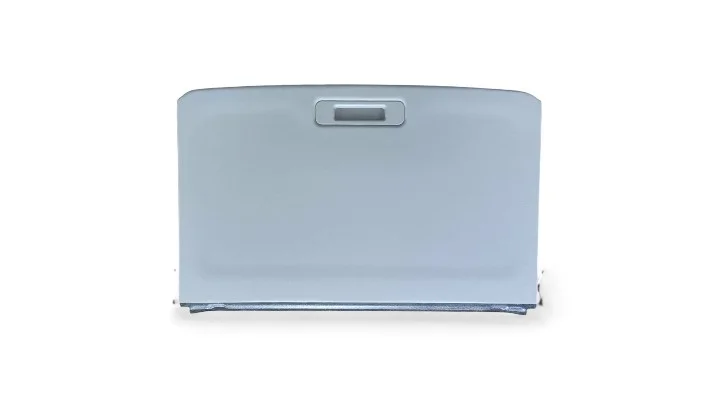
II. Functional Evolution and Product Types of Sun Visors
2.1 Basic Function: Blocking Direct and Oblique Sunlight
- Main visor (above the front windshield)
- Auxiliary visor (for side window blocking, rotatable)
2.2 Integrated Function Upgrades
| Function | Description | Process Impact |
|---|---|---|
| Vanity Mirror | Flip-up or lidless mirror integration | Mold needs to reserve assembly positions or insert areas |
| LED Lighting | Mirror frame integrated lights or touch-sensitive light strips | Requires wiring channels, snap-fit designs, thermal management |
| Ticket/Card Slot | For inserting tickets, cards | Wrapping layer opening, assembly tolerance control |
| Safety Warning Label | Airbag warning, etc. | Silk screen printing, heat transfer printing or labeling process |
| Extension Slide Rail | Extends shading range | Increased mechanism complexity, wear validation needs strengthening |
2.3 Product Structure Classification
- Hard core + foam + fabric wrapped type (Most common)
- Injection molded integral + soft-touch paint/wrapped surface type
- Composite material pressed lightweight type (Future trend, synergistic with roof module lightweighting)
III. Sun Visor Material System Analysis
The sun visor is composed of multiple material layers. Typical structure example: Outer layer (fabric/knitted fabric/PU leather) — Cushion layer (PU foam/PE foam) — Substrate skeleton (PP/ABS/composite material) — Metal shaft/pivot mechanism — Accessories (mirror frame, lights, circuits).
3.1 Substrate Materials (Core of Structural Strength)
| Material | Characteristics | Application Notes |
| PP (with or without glass fiber) | Lightweight, low cost, easy to injection mold | Scenarios with moderate dimensional stability requirements |
| ABS or PC/ABS | Good dimensional accuracy, excellent surface quality | High-end vehicles or complex function sun visors |
| PA+GF | High strength, heat resistant | Mainly used for pivot brackets, small inserts |
| SMC/BMC Composite Materials | High strength/heat resistant/metal replacement | Structural innovation application under lightweighting trend |
3.2 Internal Cushion/Filling Layer
- Foamed PU (Polyurethane): Soft, good filling properties, energy absorption.
- EPP/PE Foam Sheets: Easy to mold, can be heat-sealed with covering.
3.3 Exterior Skin Materials
| Skin Material | Appearance/Tactile Feel | Process Method | Grade Positioning |
| Knitted Fabric/Warp Knitted Fabric | Soft, sound-absorbing | Hot pressing lamination, bonding | Mainstream economical |
| PVC Leather | Controllable cost, various colors | Hot melt lamination, sewing | Mid-range vehicles |
| TPU/PU Artificial Leather | Good hand feel, improved environmental rating | Vacuum laminating, sewing | Mid-to-high end |
| Microfiber/Eco-leather | Superior tactile feel, low VOC | Adhesive bonding, wrapping composite | High-end luxury |
IV. Overview of Sun Visor Manufacturing Processes
Sun visor manufacturing typically involves multiple sequential or parallel process stages, depending on design structure, material system, and production volume requirements. The following is a typical process reference:
Raw Material Preparation → Substrate Injection Molding/Compression Molding → Hardware Shaft/Pivot Insert Molding → Foam Filling or EPP Filling → Skin Wrapping and Hot Press Forming → Functional Component Assembly (mirror, light, wiring) → Appearance Inspection → Flip Durability Validation → Packaging and Shipment4.1 Substrate Molding (Injection Molding or Compression Molding)
- Single-piece injection molding + ultrasonic welding of halves
- Left and right shell clamp injection molding + hollow filling
- Compression molding (SMC/BMC skeleton) suitable for vehicles with higher heat resistance or rigidity requirements
4.2 Insert Molding
Pre-placing **metal rods, pivot connectors** into the mold cavity, then overmolding with plastic during injection to achieve structural and mechanical integration, reducing assembly steps and improving fit accuracy.
4.3 Foaming/Filling Process
- Low-pressure PU foam injection: Ensures complete filling and surface flatness
- Pre-formed foam sheet hot press composite: Used for thin, lightweight sun visors
4.4 Wrapping and Hot Press Forming
- Hot melt adhesive + vacuum adsorption + hot knife edge cutting
- Leather sewing + manual folding (for small batch high-end parts)
- High-frequency hot pressing (suitable for PVC/PU thin skins)
4.5 Functional Component Integration
- Vanity mirror snap-fit assembly or ultrasonic welding
- LED light wire embedding in grooves, terminal interfaces for vehicle wiring harness connection
- Spring-loaded flip mechanism pre-assembly
V. Key Considerations for Sun Visor Mold Design (Focus)
Sun visor molds are fundamental to ensuring dimensional accuracy, appearance, insert precision, and wrapping quality. The following is a systematic analysis from structural, process, durability, and maintenance perspectives.
5.1 Mold Structure Planning
- Cavity Parting Line: Must consider areas invisible after wrapping; avoid visible flash lines in aesthetic regions.
- Insert Positioning: Precise positioning pins or magnetic locating blocks are needed for metal rods, pivot shafts, and mirror frame areas.
- Core Pulling Mechanism: Side core pulling is required for sun visors with sliding functions or recessed areas; complex parts may use hydraulic ejectors.
- Uniform Wall Thickness: Reduces uneven shrinkage and warpage; recommended main structure wall thickness 2.5–3.5 mm (depending on material).
5.2 Gating System (Gates/Runners)
| Mold Type | Gate Type | Applicable Scenarios |
| Edge Fan Gate | Thin-walled, large coverage parts | Reduces weld lines |
| Hot Runner Pin Gate | Multi-point filling | Improves filling balance |
| Submarine Gate | Parts with high aesthetic requirements | Reduces gate marks |
5.3 Venting and Sink Mark Control
- Parting line vent groove depth typically 0.02–0.05 mm (depending on material and molding pressure)
- Avoid sink marks in the mirror frame area; reinforce with ribs and process specific packing points if necessary
5.4 Recommended Mold Steel
| Mold Cavity Area | Recommended Steel | Characteristics |
| General Cavity | P20 / 718 | Good machinability, moderate cost |
| High-Gloss Appearance Area | 2738 / NAK80 | High polishability, clear texture |
| High-Wear Core Pulling | H13 / S136 | High hardness, corrosion resistant |
5.5 Surface Texture and Grain Simulation
The sun visor's substrate may be partially exposed before or after wrapping, or the mold may be used to produce surface finish alternative parts. The cavity can be etched with a grain to simulate leather texture, enhancing visual consistency; pay attention to matching grain depth with draft angles.
5.6 Replaceable Inserts and Platform Design
- A single main mold base can be shared across multiple vehicle series, changing inserts to accommodate different mirror frame sizes/extension slide rail structures.
- Standardized gating and cooling systems reduce mold change and debugging time.
5.7 Mold Flow Analysis (Moldflow/Simpoe) Integration Points
- Prediction of weld line locations (around vanity mirror opening)
- Warpage simulation (long, thin parts, asymmetrical wall thickness)
- Heat transfer impact of overmolded inserts
VI. Process Commonalities between Sun Visor and Passenger Vehicle Interior Trim Manufacturing
Extending from sun visors to a wider range of **passenger vehicle interior trim components** (e.g., instrument panels, door panels, pillar trims, headliners, center armrests, trunk liners), the following cross-product process commonalities can be summarized:
| Process Stage | Sun Visor | Instrument Panel | Door Panel | Headliner | Common Key Points |
| Substrate Molding | Injection/Compression | Foam Substrate+Skin | Injection+Wrapping | Fiberglass Substrate Pressing | Material+mold precision determines dimensions |
| Skin Wrapping | Fabric/Leather | Foamed Skin/Wrapped Skin | Leather/Fabric | Fiber Felt+Fabric | Wrapping adhesion, thermal stability |
| Insert Integration | Metal Rod | Airbag Module | Armrest Skeleton | Wiring/Sensors | Insert positioning, thermal deformation control |
| Surface Texture | Can be exposed | Large area visible | Large area visible | Local | Mold texture & wrapping material matching |
VII. Mainstream Process Technologies Collection for Passenger Vehicle Interior Trim Manufacturing
7.1 Injection Molding
- Applicable: Pillar trims, decorative covers, small module parts, sun visor skeletons
- Key parameters: Melt temperature, injection speed, holding pressure time, cooling circuit
- Common defects: Shrinkage, warpage, weld lines, white marks
7.2 Foam Injection Molding / Lightweight Foaming (MuCell, Physical Foaming)
Used for weight reduction, reducing internal stress, and controlling deformation; suitable for large instrument panel skeletons or thick-walled interior trim components.
7.3 Hot Press Molding (Compression Molding)
- Materials: SMC, GMT, natural fiber reinforced sheets
- Suitable for structural parts + interior trim "two-in-one" lightweight solutions
7.4 Vacuum Forming / Thermoforming
- Skin sheets preheated and then adsorbed onto the mold surface
- Commonly used for headliner substrates and soft trim overlays
7.5 Wrapping / Lamination
- Adhesive bonding, flame lamination, PUR hot melt adhesive lamination
- Automated rolling lines can achieve high consistency in decorative quality
7.6 Ultrasonic / Hot Melt / Laser Welding
Low-cost methods for interior trim assembly, local reinforcement, and replacing screws with snap-fits.
VIII. Advanced Considerations for Interior Trim Mold Design
8.1 Dimensional Chains and Assembly Tolerances
Assembly deviations from the sun visor pivot to the headliner mounting holes directly affect rotation flexibility and abnormal noise; similarly, door panels, instrument panels, and center consoles require cumulative tolerance control.
8.2 Thermal Expansion Compensation
Different materials (plastics, foams, fabrics, metals) have large differences in thermal expansion coefficients, so molds need to pre-compensate for dimensional shrinkage; extreme in-car conditions can cycle between -30°C and 85°C.
8.3 Surface Grade Zoning
A-surface for visual areas, B-surface for tactile areas, C-surface for hidden areas - partitioned design to optimize mold costs.
8.4 Quick Mold Change and Flexible Manufacturing
Platformized mold bases + replaceable cavity modules enable a single production unit to cover multiple vehicle series, facelifts, or different configurations (e.g., sun visor with/without light, with sensors).
IX. Quality Control and Testing Project Checklist
Sun visors and passenger vehicle interior trim components must undergo multi-dimensional validation. Below is a list of common test items (can be expanded into an enterprise inspection SOP template).
9.1 Appearance and Dimensions
- CMM (Coordinate Measuring Machine) dimensional inspection
- Skin wrinkles, bubbles, scratches inspection
9.2 Function and Durability
- Sun visor flip life cycle (≥ 10,000 cycles, depending on OEM standard)
- Sliding/rotating torque retention
- Snap-fit assembly/disassembly force
9.3 Environmental Tests
| Test | Condition Example | Judgment Criteria |
| Thermal Cycling | -30°C ↔ 85°C cycles | No cracks, controlled deformation |
| UV Aging | SAE J1885 or OEM specific | Fading level acceptable |
| Salt Spray | ASTM B117 | Corrosion protection for metal parts |
| High Humidity | 95%RH | Delamination, debonding check |
9.4 Safety and Regulatory Compliance
- FMVSS 201 (Interior trim head impact performance, relevant to sun visor area)
- FMVSS 302 (Material flammability characteristics)
- ECE R21 (Interior protrusions, radius requirements)
- RoHS, REACH, VOC, Odor Level
X. Digitalization and Intelligence in Passenger Vehicle Interior Trim Manufacturing
10.1 Digital R&D
- CAD 3D Master Model + Parametric Dimension Derivation
- CAE Simulation: Thermal deformation, stiffness, collision, vibration
- Moldflow Simulation: Gate location, filling balance, warpage prediction
10.2 Smart Manufacturing Factory Scenarios
| Aspect | Intelligent Means | Effect |
| Injection Molding Workshop | Closed-loop control of process parameters | Reduces batch-to-batch variation |
| Wrapping Line | Visual defect recognition | Real-time rejection of defective products |
| Assembly Station | Torque-sensing electronic tightening | Data traceability |
| MES System | Batch tracking/Process traceability | Quality traceability |
XI. Lightweighting and Sustainable Development Trends
The automotive industry's "Dual Carbon" goals and energy-saving regulations drive continuous weight reduction and environmentalization of interior trim components, and sun visors are no exception.
11.1 Material Lightweighting
- Foamed core materials replace solid plastics
- Bio-based or recycled PP/PE substrates
- Natural fiber reinforced composite sheets (hemp fiber, bamboo fiber)
11.2 Process Material Reduction
- Local reinforcement + topology optimized skeleton
- Hollow structures, honeycomb cores
11.3 Environmental Protection and VOC
- Low VOC adhesives
- Water-based coatings and hot press lamination replace solvent-based adhesives
- IMDS data reporting and regulatory compliance for interior trim components
XII. Sun Visor Project Development Process (OEM/Tier-1 Supplier Collaboration Example)
The following is a reusable project management Gantt-style phase division (adaptable to APQP framework).
| Phase | Content | Deliverables | Risk Points |
| RFQ Technical Review | Functions, dimensions, regulations | Technical clarification form | Unidentified regulatory differences |
| Concept Design | Enclosure, pivot mechanism | CAD concept drawings | Structural interference |
| Mold Flow/DFM | Molding analysis, mold split | DFM report | Sink mark/warpage risk |
| Mold Design | Parting, cooling, inserts | Mold 2D/3D drawings | Core pulling complexity |
| T0 Trial | First article | Appearance dimensional data | Flash, short shot |
| T1/T2 Optimization | Process debugging | Improvement report | Warpage, flash |
| PPAP/Mass Production | Batch validation | PPAP document package | Insufficient process capability |
XIII. Synergistic Platform Strategy for Sun Visor Molds and Passenger Vehicle Interior Trim
OEMs and large interior Tier-1 suppliers are promoting a **component platformization + appearance differentiation** development model:
- Same mold base, different fabric colors & LOGOs
- Same structure, different electrical configurations (with/without light, with sensor)
- Multi-region regulatory versions (left-hand/right-hand drive, North America/EU label differences)
This strategy reduces mold investment and supply chain complexity, improving global synchronous development efficiency.
XIV. Cost Control Key Points for Sun Visors & Interior Trim
| Cost Module | Influencing Factors | Cost Reduction Suggestions |
| Mold | Cavity count, steel, texture | Common mold design, standardization of parts, modular inserts |
| Material | Resin, foam, skin | Alternative materials, recycling, thickness optimization |
| Process | Cycle time | Thermal management optimization, automated part removal |
| Assembly | Labor, rework rate | Poka-Yoke jigs, automated welding/wrapping |
XV. FAQ: Common Questions about Sun Visors and Passenger Vehicle Interior Trim
Q1: What to do if sun visor uneven foaming causes bulging?
A: Check mold clamping pressure, injection volume, foaming agent temperature; if necessary, add vents or foam diversion channels.
Q2: Sun visor loose rotation and abnormal noise?
A: Pivot material pairing, tolerance stack-up, lubricant selection, improved wear-resistant bushings.
Q3: Wrapping edge lifting?
A: Reduce rebound material tension, improve adhesive curing temperature, add folding clamps.
Q4: Interior trim VOC exceeding standards?
A: Replace with low VOC auxiliary materials, extend baking volatilization cycle, switch to eco-friendly formulations from material suppliers.